


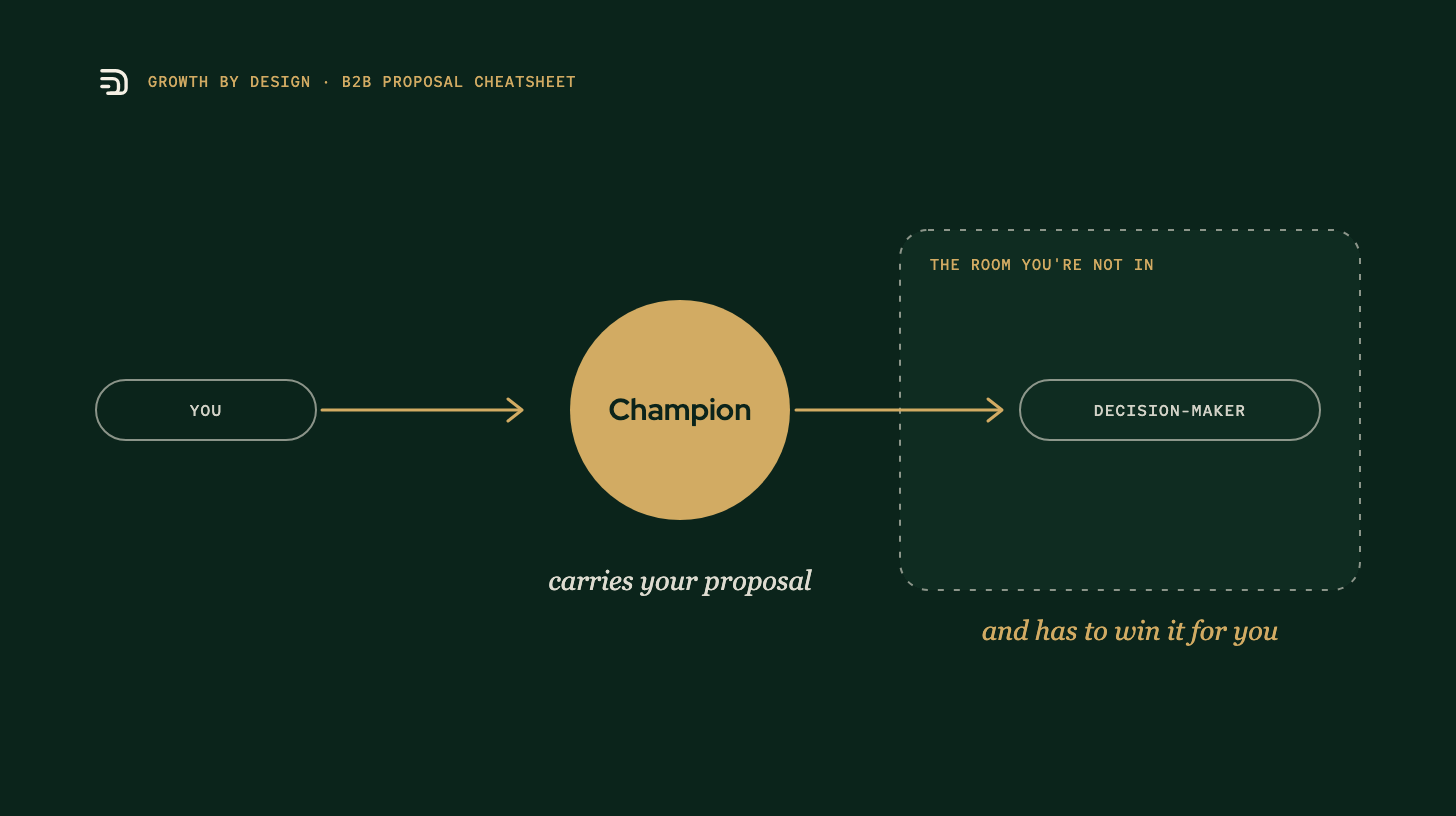
Your proposal gets decided in a meeting you're not in.
The person in that room is your champion. This cheatsheet is a structured way to give them what they need to justify the deal and sell it internally, connecting the client's pain and problem to the result they want, with AI doing the research.
Context
For any B2B company selling complex solutions, success depends on aligning with client needs, ensuring internal buy-in, and driving conversions. This Standard Operating Process (SOP) leverages AI tools to gather insights, empowering the champion to advocate effectively, ensuring every deal is a no-brainer. This approach ensures consistency, efficiency, and success, aligning with our goal of delivering value and driving results.
7-Steps for Building the Best Deal
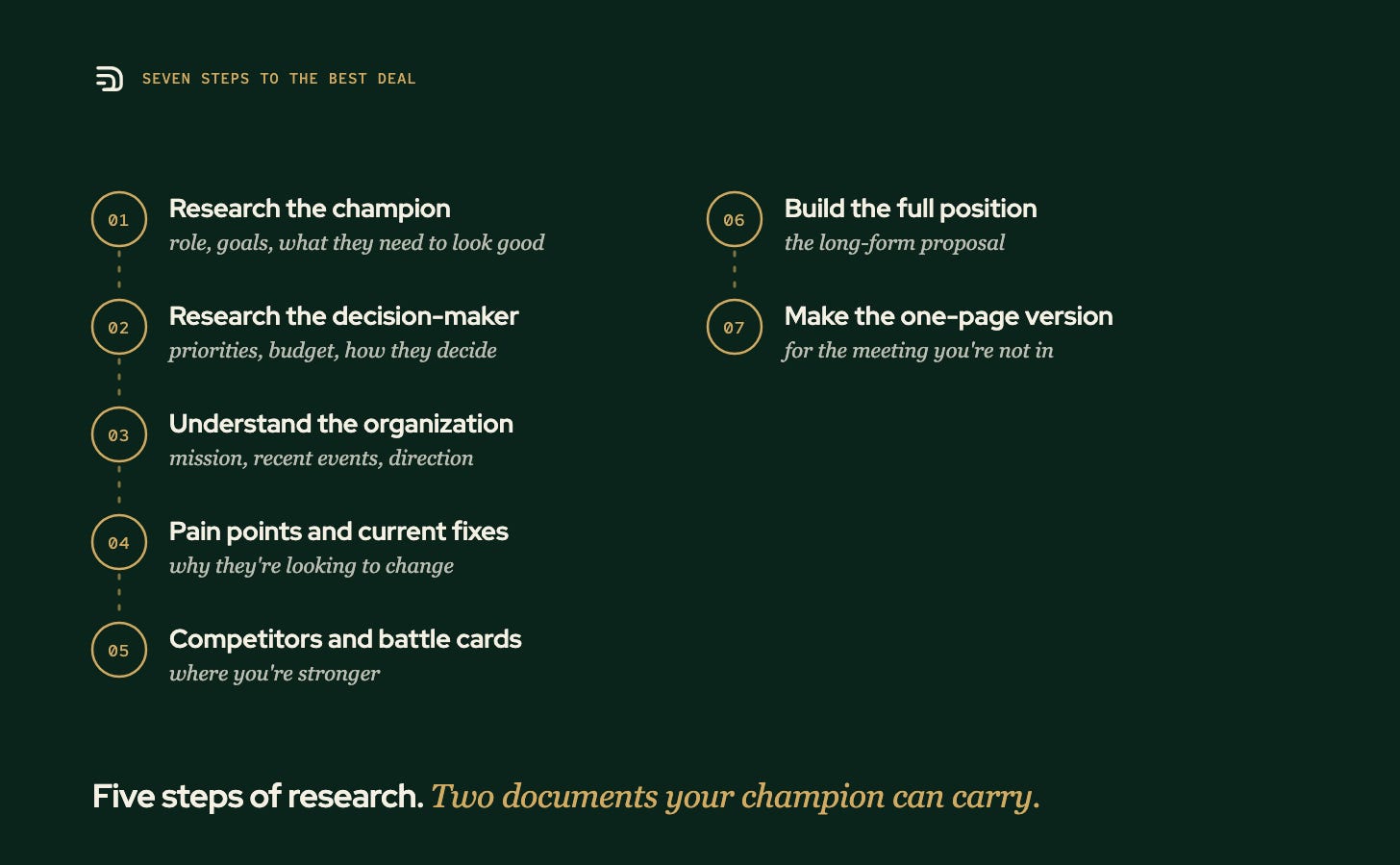
Identify and Research the Champion
Objective: Understand the champion’s role, motivations, and how the solution aligns with their goals, empowering them to justify internally.
Process:
Use Grok to analyze LinkedIn profiles, company bios, and X posts to uncover motivations and professional goals, such as improving efficiency or gaining recognition.
Use Perplexity for current, relevant details on their activities, such as recent X posts or news mentions, revealing their pain points and desires.
Example Questions:
What is their role and responsibilities?
What challenges do they face in their current process?
How can our solution help them achieve their professional goals?
Outcome: Identify alignment points, ensuring they feel heard and empowered, such as providing customizable proposal kits and case studies to support their internal pitch. This is their chance to demonstrate leadership, connecting their actions to measurable outcomes like improved efficiency.
Identify and Research the Decision-Maker
Objective: Understand the decision-maker’s priorities and decision-making style to equip the champion with arguments for budget approval.
Process:
Use Grok to analyze leadership bios and annual reports to identify background and valued metrics (e.g., cost savings, ROI).
Use Perplexity for recent news on their role, budget control, or strategic priorities from company websites or press releases.
Use ChatGPT to synthesize internal documents if available, mentioning preferences or budget constraints.
Example Questions:
Who makes the final decision and holds the budget?
What are their key priorities (e.g., compliance, cost)?
How can our solution address their needs to justify investment?
Outcome: Tailor the proposal to their decision criteria, ensuring the champion has data to align with their goals, such as highlighting ROI and compliance benefits. This ensures they can sell internally with confidence, driving measurable results.
Understand the Client Organization
Objective: Grasp the company’s mission, values, recent events, and challenges to connect the solution to their strategic direction.
Process:
Use Grok for deep analysis of the company’s mission, values, and strategic goals from their website and annual reports.
Use Perplexity for current news, such as press releases or articles on recent events (e.g., leadership changes, mergers).
Use ChatGPT for synthesis if internal documents provide additional context on challenges or initiatives.
Example Questions:
What is the company’s mission and strategic goals?
What recent events or challenges are they facing?
How does our solution align with their objectives to drive outcomes?
Outcome: Align the solution with their strategic direction, addressing specific challenges, such as freeing time for strategic initiatives, ensuring the champion can connect dots to desired results. This is their opportunity to lead, showing how the solution contributes to long-term success.
Identify Pain Points and Current Solutions
Objective: Pinpoint specific problems and solutions considered, equipping the champion to justify the need for change.
Process:
Use Grok for deep analysis of pain points from industry benchmarks and client communications, identifying gaps in current processes.
Use Perplexity for current details on solutions considered, such as competitor reviews or industry reports, revealing why they’re seeking alternatives.
Use ChatGPT for synthesis of internal notes or emails mentioning pain points, like outdated systems or low adoption.
Example Questions:
What are their current process issues (e.g., inefficiencies, compliance risks)?
What solutions are they considering or using, and why are they looking for a change?
How does our solution address their pain to deliver desired results?
Outcome: Highlight how the solution solves their pain points better, such as improved efficiency or reduced costs, ensuring the champion can articulate the problem-solution fit. This empowers them to sell internally, connecting pain to outcomes like cost savings or compliance.
Analyze Competitors and Pull Battle Cards
Objective: Understand competitors and highlight the solution’s advantages, equipping the champion to sell internally against alternatives.
Process:
Use Grok for deep analysis of competitor strengths and weaknesses from industry reports, identifying gaps.
Use Perplexity for current details on competitor features, pricing, and customer feedback from websites or news.
Use ChatGPT to synthesize internal battle cards if available, comparing the solution’s advantages, such as cost-effectiveness and ease of use.
Example Questions:
Who are the main competitors, and what are their offerings?
What are their strengths and weaknesses compared to our solution?
How does our solution outperform in areas critical to the client, like compliance or support?
Outcome: Highlight differentiators, such as data sovereignty or specialized support, ensuring the champion can justify why our solution is superior, connecting to desired outcomes. This is their chance to lead, showing how the solution drives measurable results.
Build a Comprehensive Position
Objective: Create a long-form proposal connecting pain, problem, desire, result, outcome, and motivation with the solution, empowering the champion to justify internally.
Process:
Use ChatGPT for synthesis, compiling all gathered information into a narrative.
Address each pain point, align with desires (e.g., efficiency, compliance), and use data (e.g., case studies, testimonials) to support claims, leveraging Grok for deep thinking on alignment.
Structure:
Context: Company and stakeholder overview, motivations.
Key Issues: Pain points, current solutions, competitor comparison.
Decisions: Why the solution is best, connecting pain to results and outcomes.
Next Steps: Clear action items and ownership for the champion.
Outcome: A detailed proposal driving buy-in, with measurable outcomes tied to success, such as 20% time savings, ensuring the champion can sell internally with confidence. This is their opportunity to demonstrate leadership, connecting their actions to long-term success.
Create a Concise Presentation
Objective: Summarize key points in a one-page format, equipping the champion to present to decision-makers effectively.
Process:
Use ChatGPT for synthesis, creating a visually appealing one-pager with bullet points and infographics.
Highlight benefits, differentiators, and urgency, using Perplexity for current data to ensure relevance.
Content:
Headline: “Why [Company] Should Choose [Solution]”
Key Benefits: Cost-effective, user-friendly, compliance-focused.
Differentiators: Vs. competitors, tailored support.
Call to Action: “Schedule a demo by [date] to see the impact.”
Outcome: A clear, concise pitch ensuring quick decision-making, empowering the champion to advocate with clarity. This is their chance to lead, showing how the solution drives measurable outcomes.
Empowering the Champion to Hero Status
Provide the champion with the detailed proposal and one-pager, ensuring they have all necessary materials to justify and sell internally.
Offer training or resources on pitching the solution, such as webinars or templates, using ChatGPT for synthesis of best practices.
Supply case studies, testimonials, and data to support their advocacy, leveraging Perplexity for current client success stories.
Establish a communication channel for quick responses to questions or objections, ensuring they feel supported and recognized as a leader.
Frame their role as an opportunity to demonstrate leadership, connecting their actions to measurable outcomes, such as improved efficiency or cost savings. This is their chance to take control, driving long-term success for their organization.
Implementation
Implement this SOP for each new deal, tracking metrics like conversion rates to measure success. This structured approach ensures every deal is tailored, compelling, and action-driven, driving business growth by elevating the champion to hero status.
How we put AI into a team's daily work.
This Cheat Sheet provides a systematic way to approach B2B sales, ensuring sales teams are well-prepared to address client needs, close deals effectively, and elevate the champion to hero status, driving measurable outcomes and long-term success.
Where would this pay off first in your company? The free AI Quick-Wins Report ranks your AI quick wins by payoff, with a first step for each.