


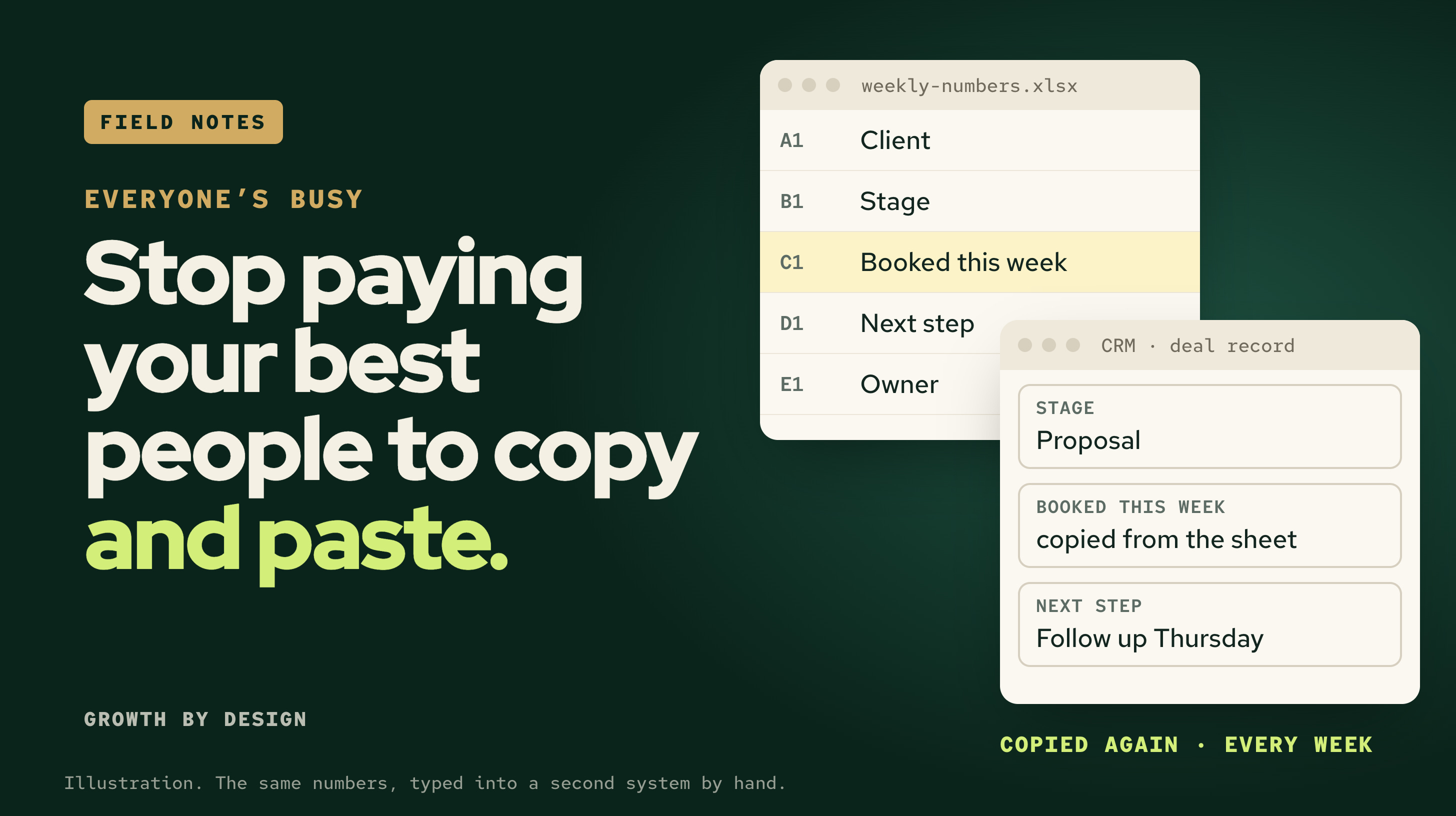
In September 2025, most of the manual drag here at Growth by Design was mine.
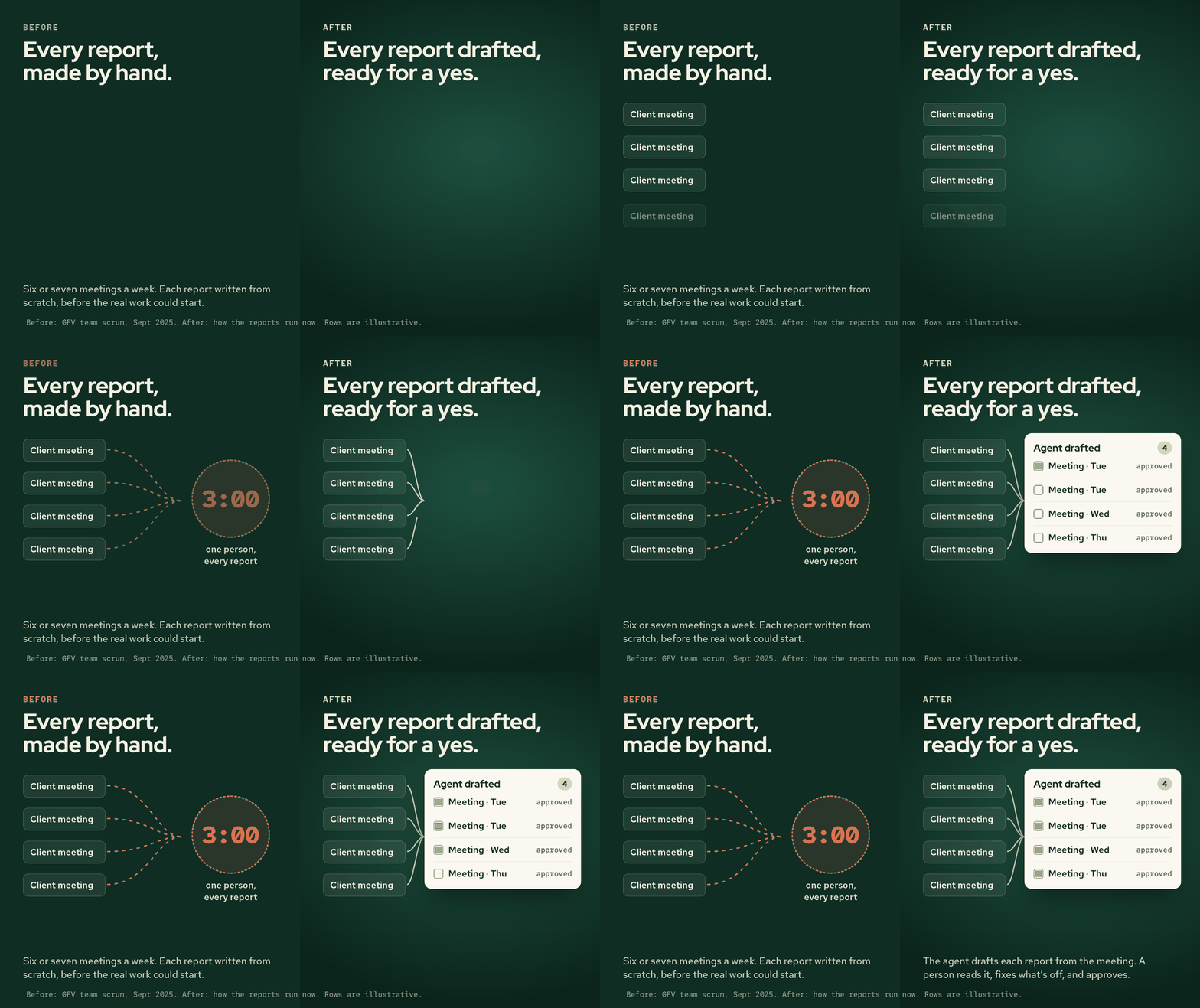
Every client meeting needed a report afterwards: where we stood against the target and goals, what was decided, who owns what, what happens next. We had a good prompt for it, but I pasted each transcript in myself, read what came back and fixed it. For one client, pulling those reports together across six or seven meetings took about three hours before I could start the work they were paying us for. After a vacation, it took me a week and a half to clear the backlog.
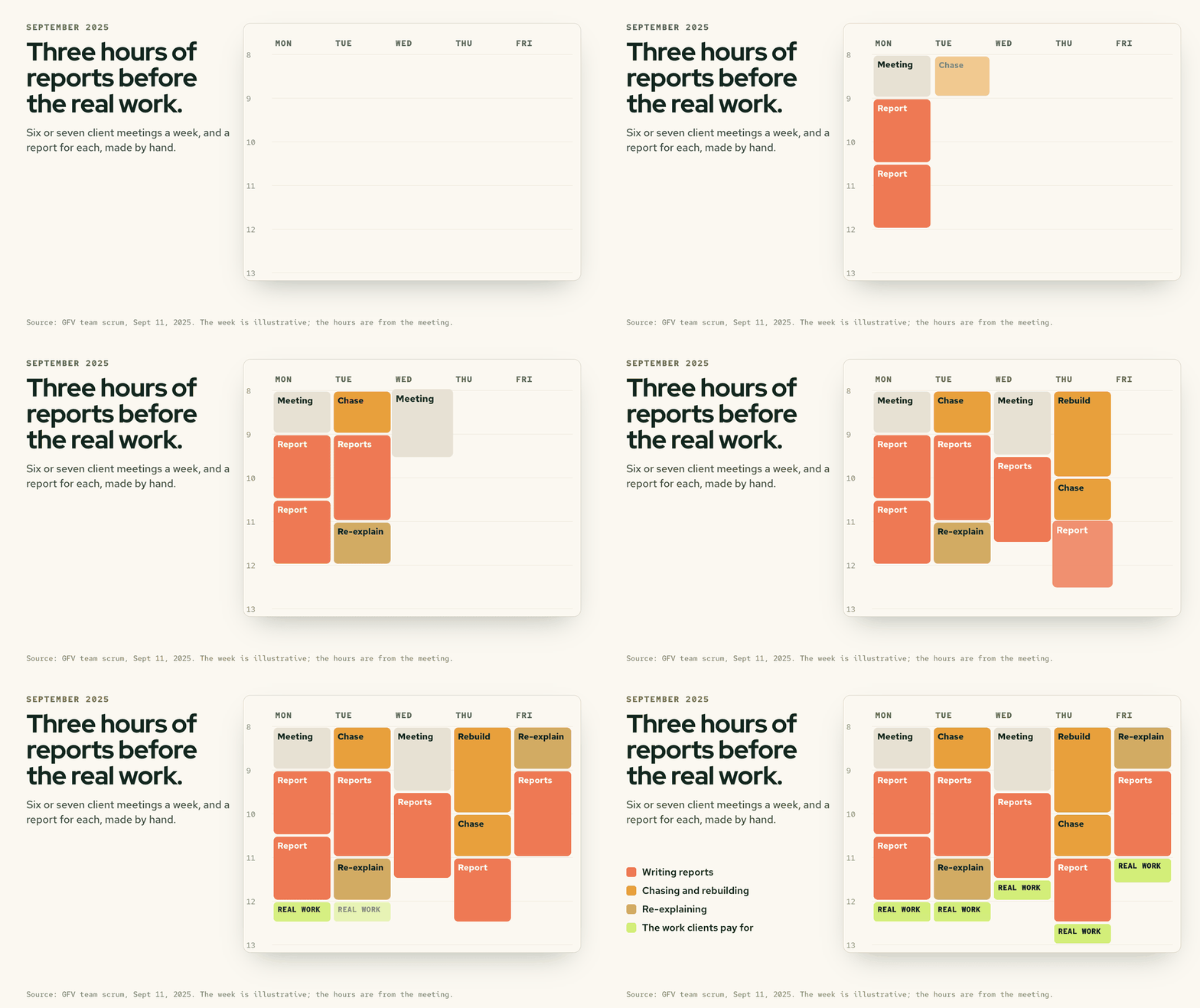
Nobody on our team was idle. Everyone was busy, yet work still moved slowly.
Here’s what you’ll have if you follow this: within two weeks, one week of your key person’s drag on paper, the first piece picked, and an agent preparing it for a person to approve.
The drag nobody puts on the org chart
I see the same pattern in most growing companies. Your people are capable, and their weeks are full. But a big share of that week isn’t the job you hired them for. It’s the drag around it:
Copying the same numbers from one system into another.
Chasing the update, the document, the sign-off.
Re-explaining what was decided to the next person who needs it.
Rebuilding the report that gets rebuilt every week.
None of it shows up on an org chart. All of it lands on the people whose time you can least afford to lose.
Hiring doesn’t fix it. Another person means another set of hands doing the same copying and chasing.
Why our first agent made it worse
Our own fix wasn’t clean.
We built agents to take the reports and follow-ups off our plates. By April 2026, my chief of staff at the time had stopped handing them work, because going back and forth with the agent on things already handled had become an extra step. One follow-up had been handled twice.
She was right. The agent had become one more thing to check.
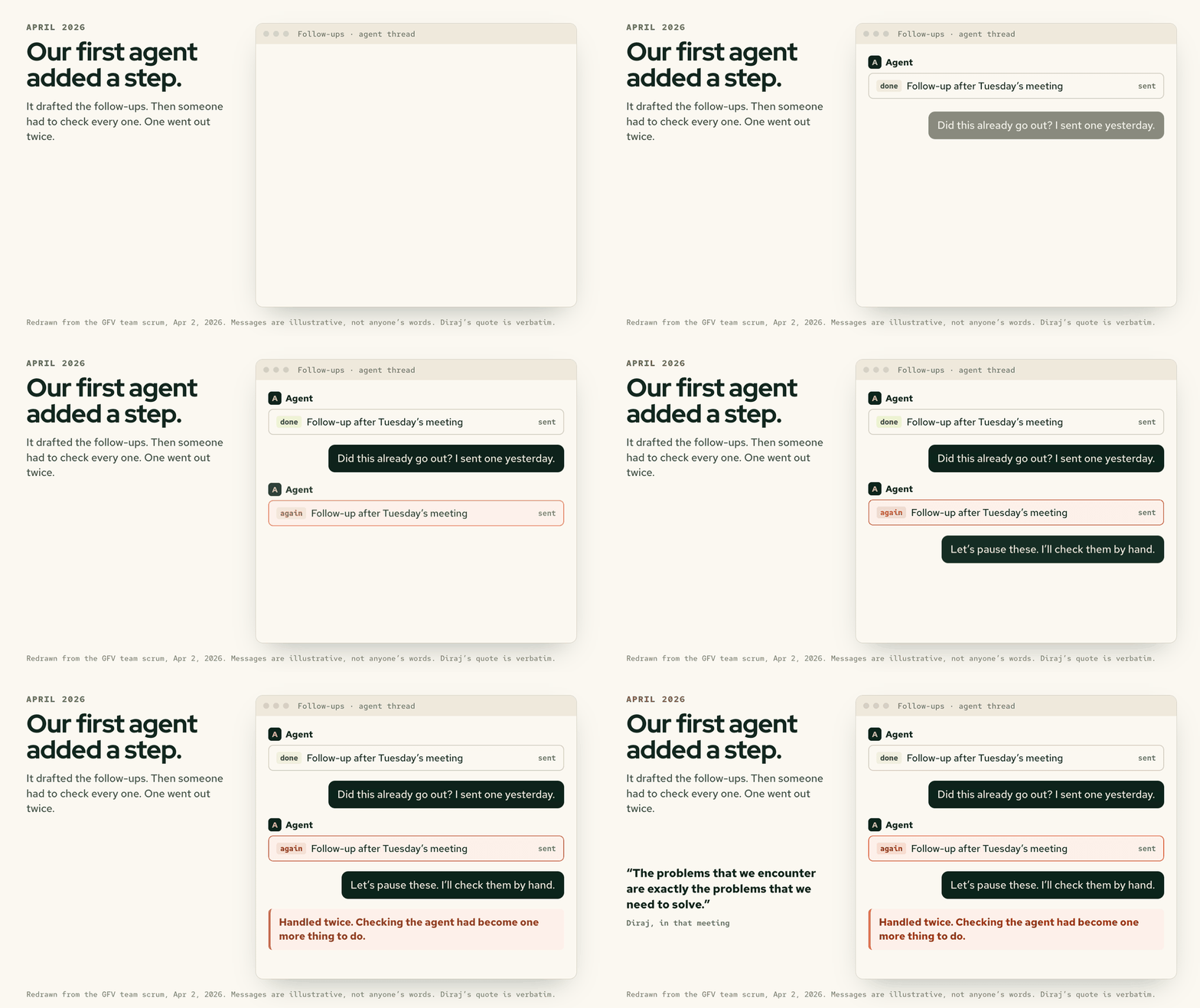
What I said in that meeting is still how I think about it: “The problems that we encounter are exactly the problems that we need to solve.”
An agent only takes drag off a person once that person stops checking its work. Until then, it adds drag.
How to take the drag off, one piece at a time
This is the order we follow with clients, and on ourselves.
1. Log the drag for one week. Pick one key person. Each time they copy, chase, re-explain or rebuild something before the real work starts, they note it, with the minutes. Don’t fix anything yet.
Time: five minutes a day. It worked when: the same three or four items keep coming up.
2. Pick the one closest to cash. Choose the item that costs the most hours, or slows a sale or an invoice. That’s your first workflow.
Time: 30 minutes. It worked when: you can say in one sentence why this one goes first.
3. Connect the systems it touches, and agree what the numbers mean. Most drag lives between two tools that don’t agree. Link them. Write down what “booked” or “done” means, and who decides.
Time: an afternoon. It worked when: two people looking at the same number get the same answer.
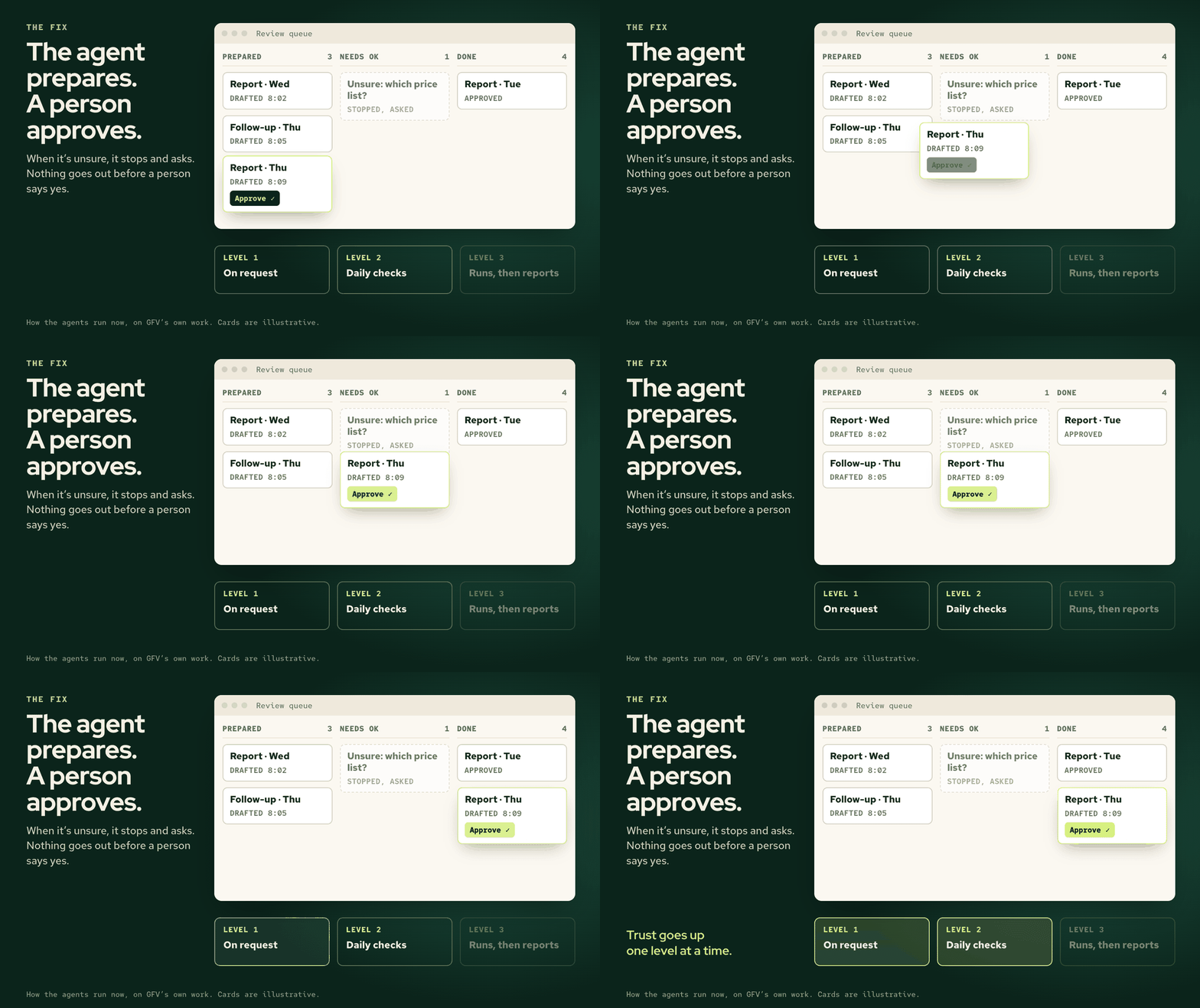
4. Let the agent prepare and a person approve. The agent drafts the report, the follow-up or the CRM entry. A person checks it and says yes. When the agent’s unsure, it stops and asks. Nothing goes out before a person decides.
Time: a first version in a day or two. It worked when: checking it takes five minutes, and nobody does it by hand.
5. Raise trust one level at a time. Start on request: the agent does nothing unless asked. Move it to daily checks once it has earned that, so it reviews the work each morning and flags what changed.
It worked when: nobody re-checks its work, and nothing gets done twice.
6. Count the hours that came back. Not hours saved in theory. Hours your key person actually got back. That number tells you whether to start the next one.
What it looks like now
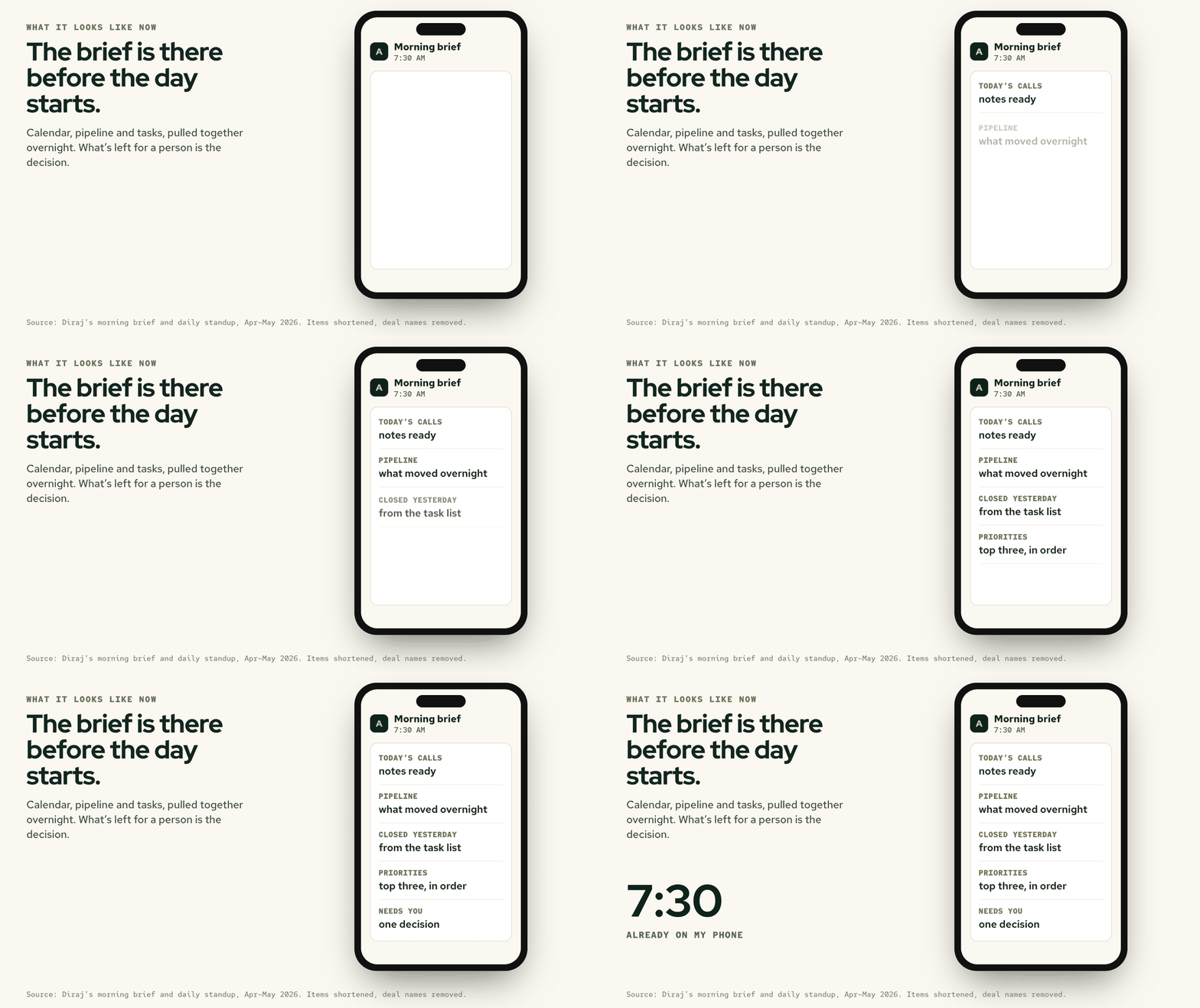
We built a morning brief that lands on my phone with the day’s calls and where the pipeline stands, and a daily standup that builds itself from our task list: what closed yesterday, today’s priorities, and anything that needs me. We’re still changing both.
That’s the whole idea. The people you hired are good at the work you hired them for. Take the copying, chasing and re-explaining off them, one piece at a time, and let them do it.
Try this today
It takes 20 minutes. Ask the person you’d most like to give time back to: “What did you copy, chase, re-explain or rebuild this week before you could start your real work?”
Write down each answer with a rough number of minutes. Then circle the one closest to a sale or an invoice.
That’s your first candidate. Next week’s log will tell you if you’ve got it right.
Then try this on your next meeting
This is the prompt we started with, in February 2025. Put it above your transcript. Only one of its five lines is about the meeting itself. The rest show where you stand against your goals, and that’s the part people read.
from this transcript, provide a post-meeting update report that I can share with the [client] team.

Use this framework.

Post Meeting Report Framework

1. Overview of overall focus, objectives and outcomes of the engagement.
2. What we have accomplished and determined so far.
3. What we discussed and decided in this previous meeting.
4. Where we are in our overall progress.
5. What are next steps, with timeline, roles, responsibilities and execution.
One question
Who on your team would you most like to give a day back to, and what’s eating it?
Reply and tell me. I read every answer.
Diraj
Paid subscribers get the rest: the full report prompt that tracks your target and goals across every meeting, the follow-up and daily prompts, the drag log, the workflow design sheet and the agent instructions, ready to copy or download.
