


Every VP of Sales you've ever met has a folder on their desktop called "Q3 Forecast FINAL v7 ACTUAL FINAL.xlsx"
Every RevOps manager has a recurring 90-minute meeting called "Data Reconciliation" that could be replaced by a cron job.
Every growth marketer has a mental model of their funnel that exists exclusively in their head — and when they leave, it walks out the door with them.
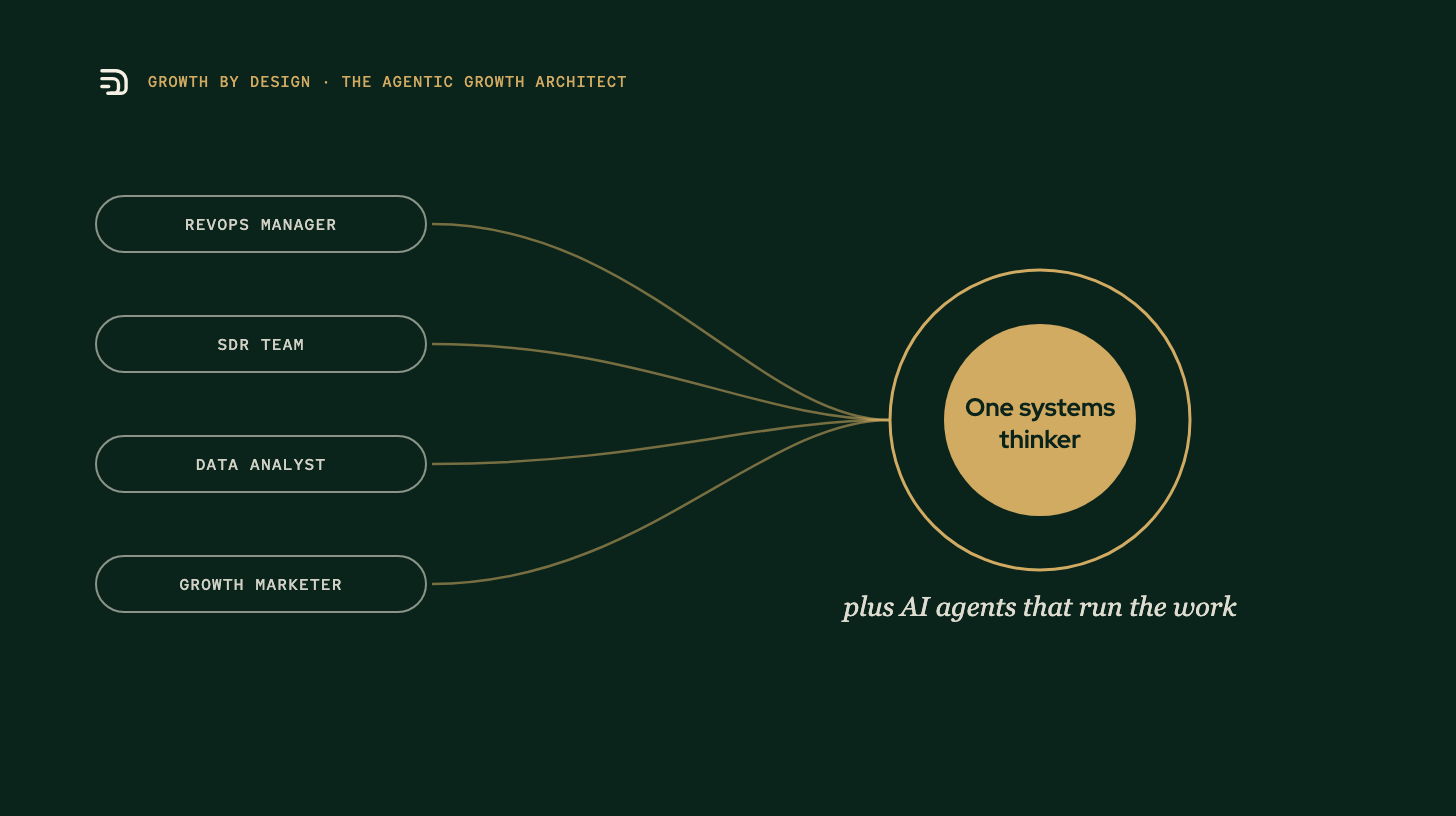
The Agentic Growth Architect is the person who looks at all of this and says: "What if we just… didn't do any of that manually?"
This isn't a futuristic job title dreamed up by a LinkedIn influencer. It's the role that's already being hired at the fastest-growing companies in the world — and it's replacing three to four traditional hires with one systems thinker who builds autonomous revenue infrastructure.
Here's the complete playbook: what this person does, what they earn, where to find them, and a job posting template you can steal today.

What Is an Agentic Growth Architect?
An Agentic Growth Architect sits at the intersection of growth strategy, AI engineering, and revenue operations. They don't run campaigns. They don't manage a team of SDRs. They don't build dashboards in Looker.
They build the system that does all of those things autonomously.
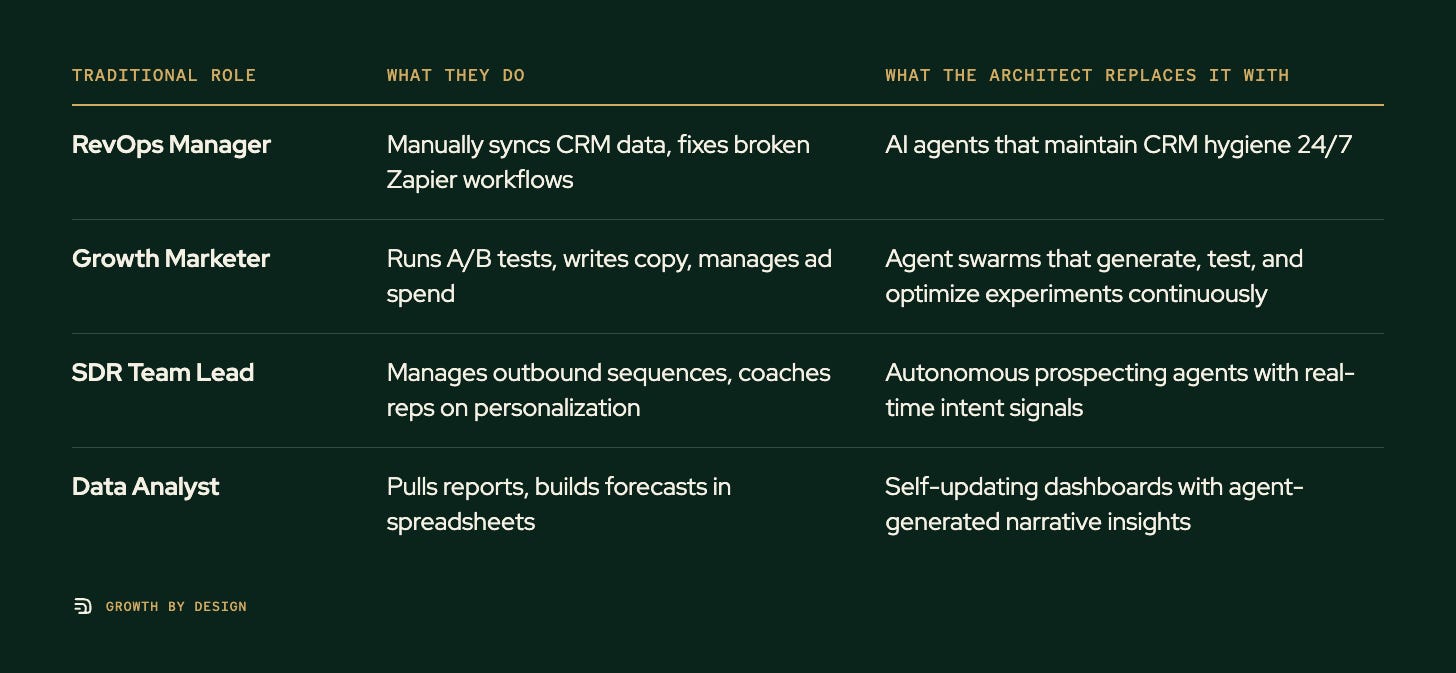
One Agentic Growth Architect replaces $400K–$600K in loaded headcount costs — while producing output that's faster, more consistent, and runs while everyone else sleeps.
The Persona: Who Is This Person?
This is not a traditional marketer who learned to code. This is not a backend engineer who read a blog post about growth hacking. The Agentic Growth Architect is a specific breed.
Background DNA
They've built something from scratch — a product, a company, a system — and it worked. They understand the full revenue lifecycle not because they read about it, but because they've lived inside the machine.
Typical Career Path
Started as a software engineer or full-stack developer (often self-taught or bootcamp → obsessive learner)
Moved into growth engineering, product engineering, or DevOps
Got frustrated with the gap between "what marketing wants" and "what engineering builds"
Started building autonomous systems to bridge that gap — initially as side projects, then as their primary job function
Has 4–8 years of professional experience, but their effective experience feels like 15 because they've automated themselves into progressively more strategic roles
Personality Traits
Systems Thinker: Sees workflows, not tasks. Thinks in feedback loops, not linear processes
Productively Lazy: Their defining characteristic — they refuse to do anything manually twice. If it can be automated, it will be — before the week is out
Revenue-Literate: Can read a P&L, understands unit economics, knows what CAC:LTV means in practice (not just theory)
Comfortable with Ambiguity: Doesn't need a spec. Give them a problem and access to the systems — they'll figure out the architecture
Builder, Not Manager: They'd rather write a Python script at 11 PM than sit in a meeting at 11 AM. But they can explain their architecture to a CEO in plain English
Red Flags: Who This Person Is NOT
❌ Someone whose primary skill is "prompt engineering"
❌ A marketer who uses ChatGPT for copywriting and calls it "AI-native"
❌ An engineer who has never touched revenue metrics or customer data
❌ Anyone who says "I'm more of a strategy person" when asked to demo a working system
❌ A consultant who talks in frameworks but has never shipped production code
The Skills Matrix
Tier 1 — Non-Negotiable (Must Have Day One)
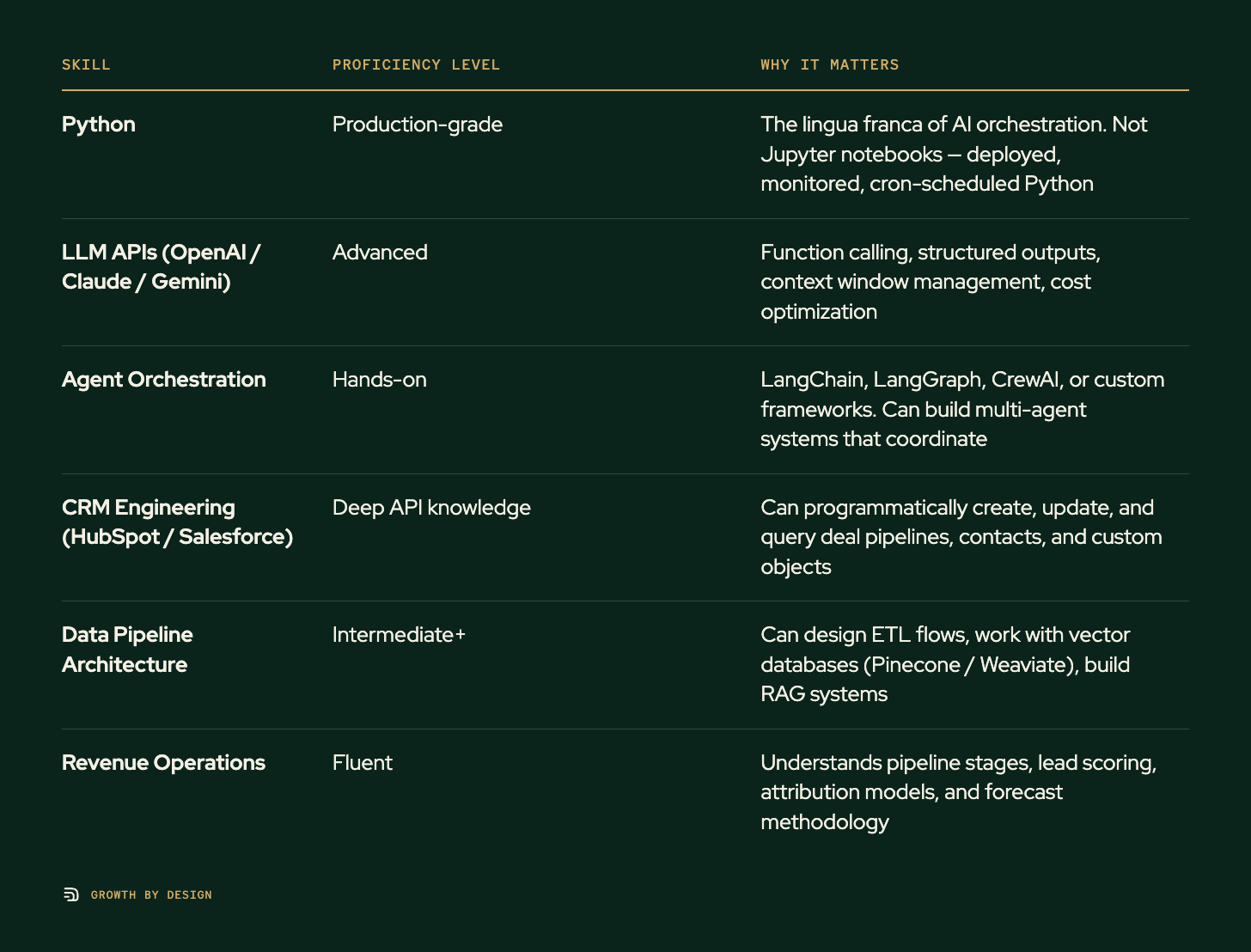
Tier 2 — Strong Preference (Can Learn Fast)
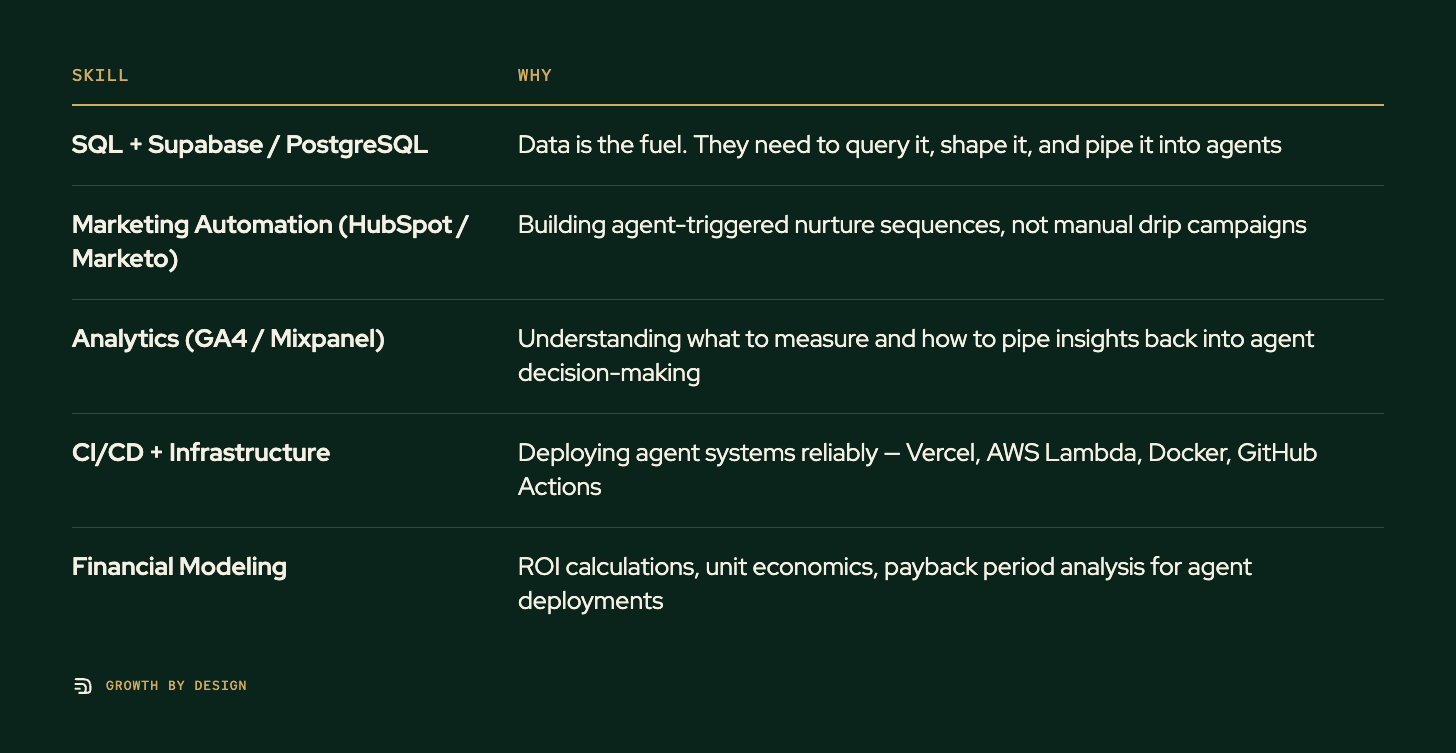
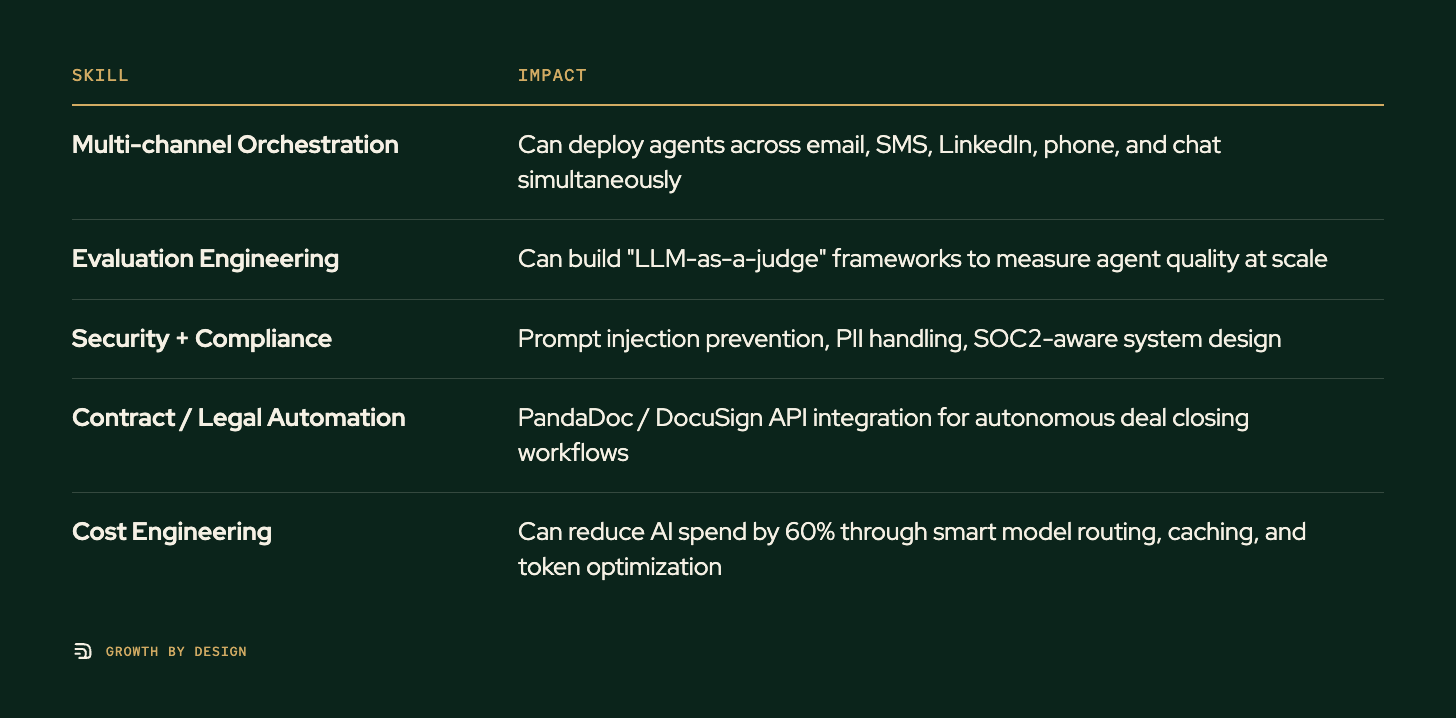
Tier 3 — The 10x Differentiators
Compensation: What They Earn
This is where it gets interesting. The Agentic Growth Architect sits in a compensation gray zone — they're not a pure engineer, not a pure marketer, and not a traditional executive. But the market is pricing them aggressively.
FAANG / Big Tech
At Google, Meta, or Apple, the closest analogue is a Senior/Staff ML Engineer or Growth Engineer:
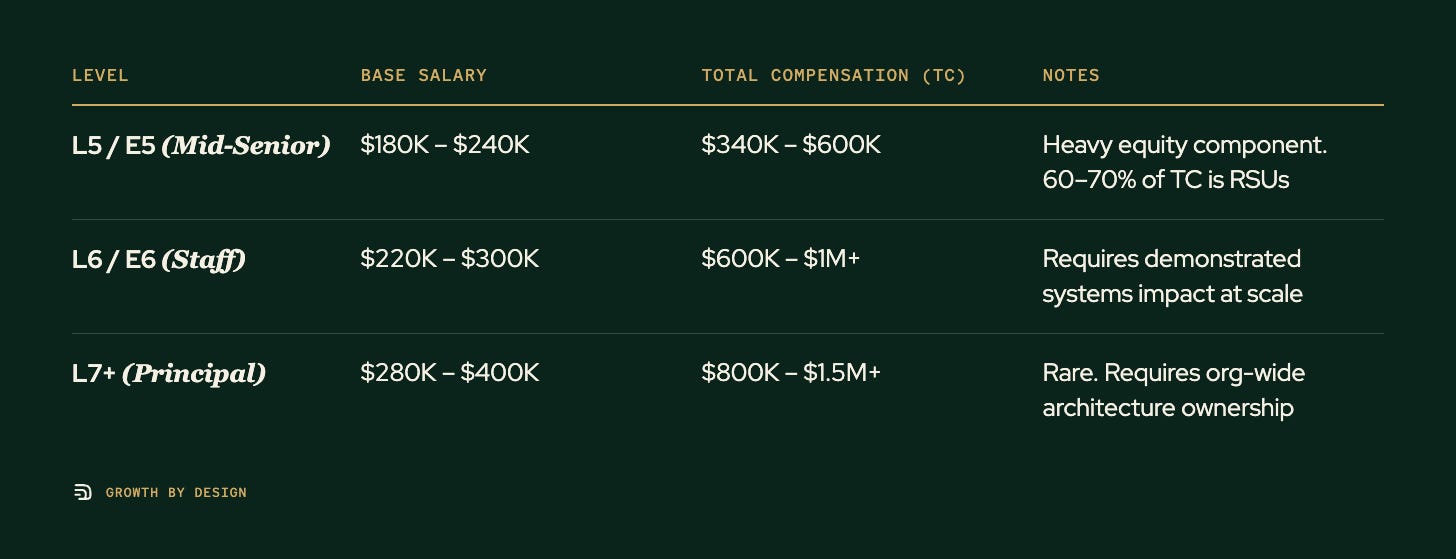
The catch: FAANG companies rarely have a role called "Agentic Growth Architect." They split the function across Growth Engineering, ML Platform, and GTM Operations teams. The opportunity cost of hiring this person at Google is that they'll be building internal tools for one product — not designing an entire autonomous revenue system.
Growth-Stage Startups (Series A / B)
This is where the role actually exists as a single hire:
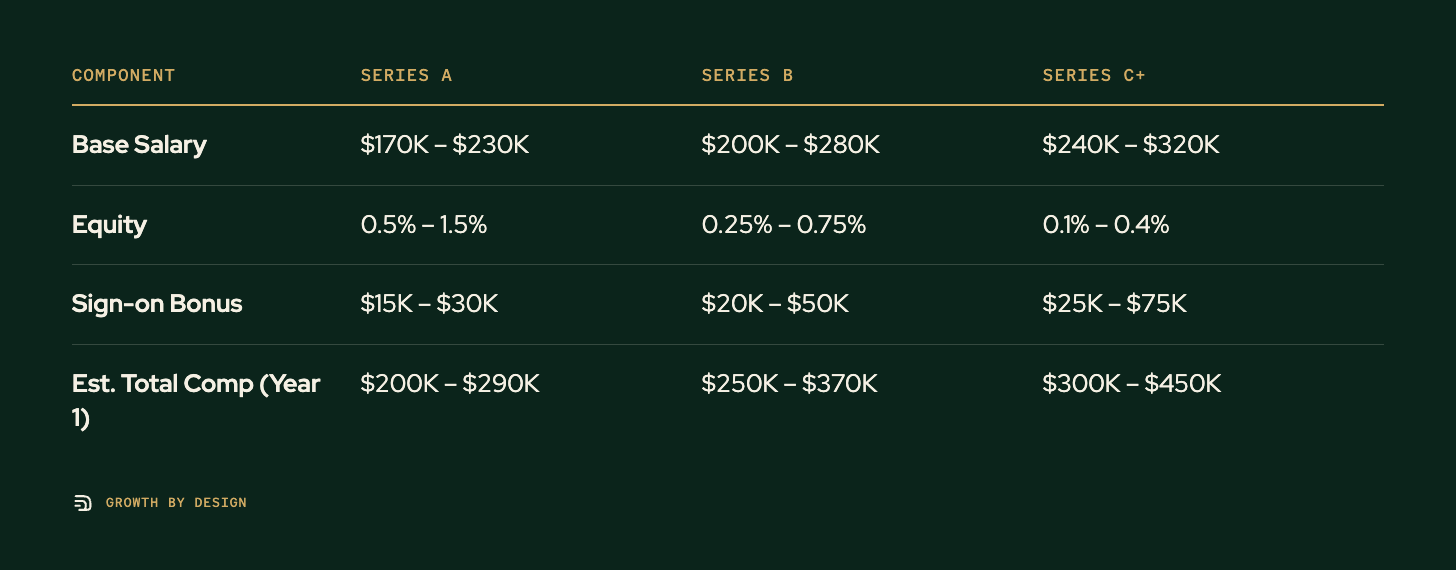
The AI premium: Candidates with production agentic AI experience command a 15–40% premium over traditional growth engineering roles. The supply of people who can both think strategically about revenue and build production AI systems is vanishingly small.
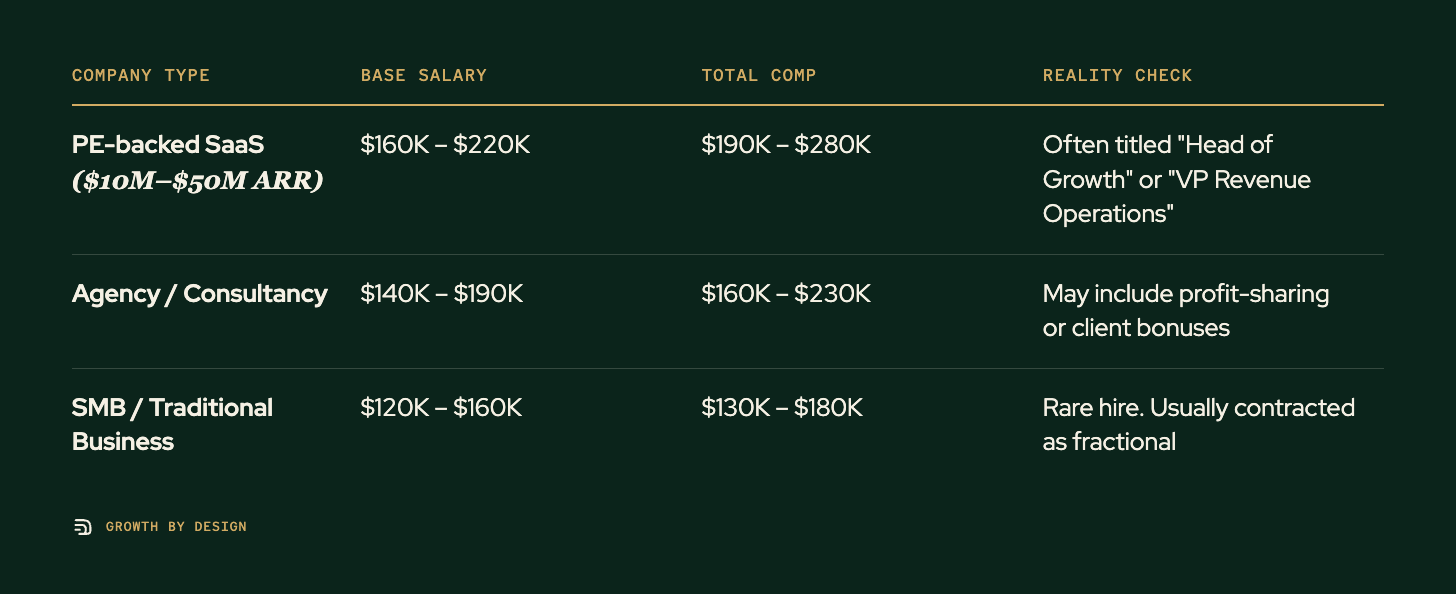
Mid-Market / Non-Tech Companies
The Fractional Model
Many companies can't justify a $250K+ full-time hire for this role. The emerging model:
Fractional Agentic Growth Architect: 10–20 hours/week, $15K–$25K/month retainer
Project-Based: $50K–$150K for a 90-day agent deployment sprint
Contract-to-Hire: 3-month trial at $175–$275/hour, converting to FTE with equity
Where to Find Them
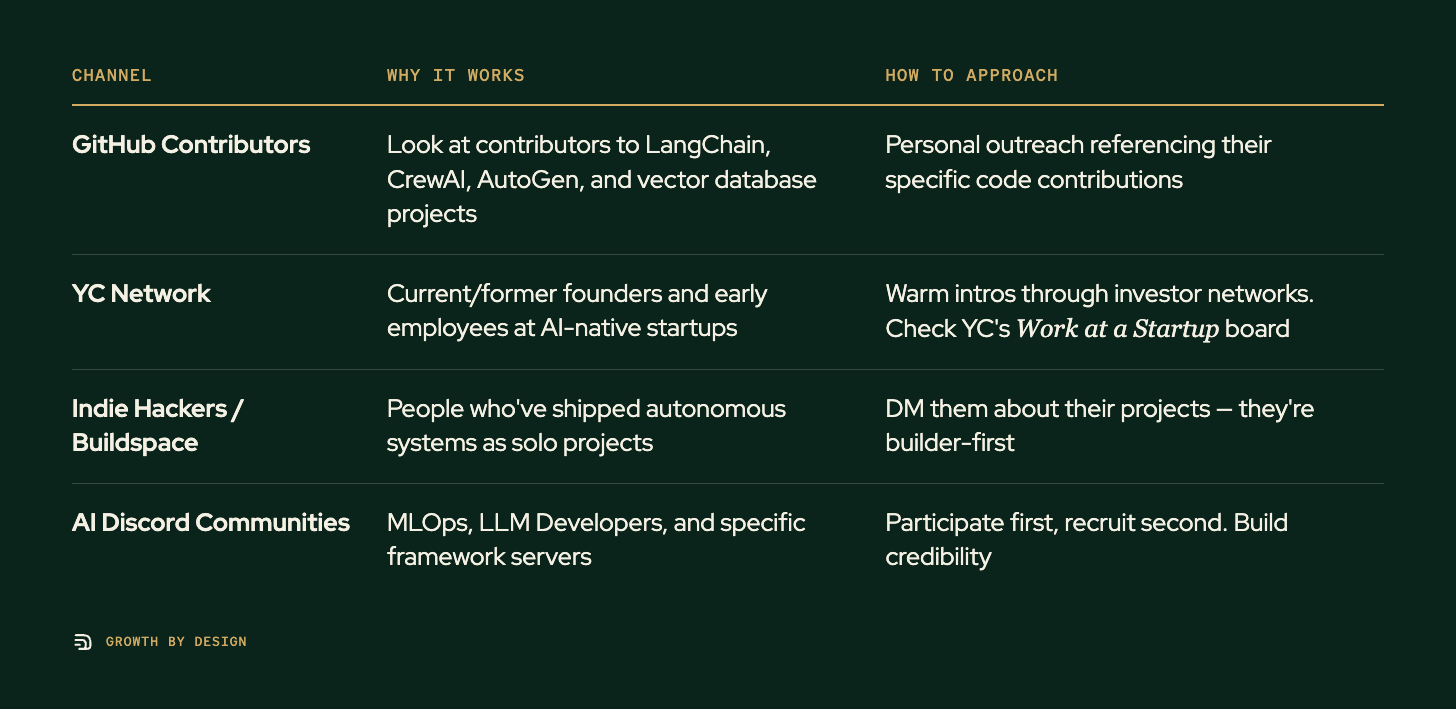
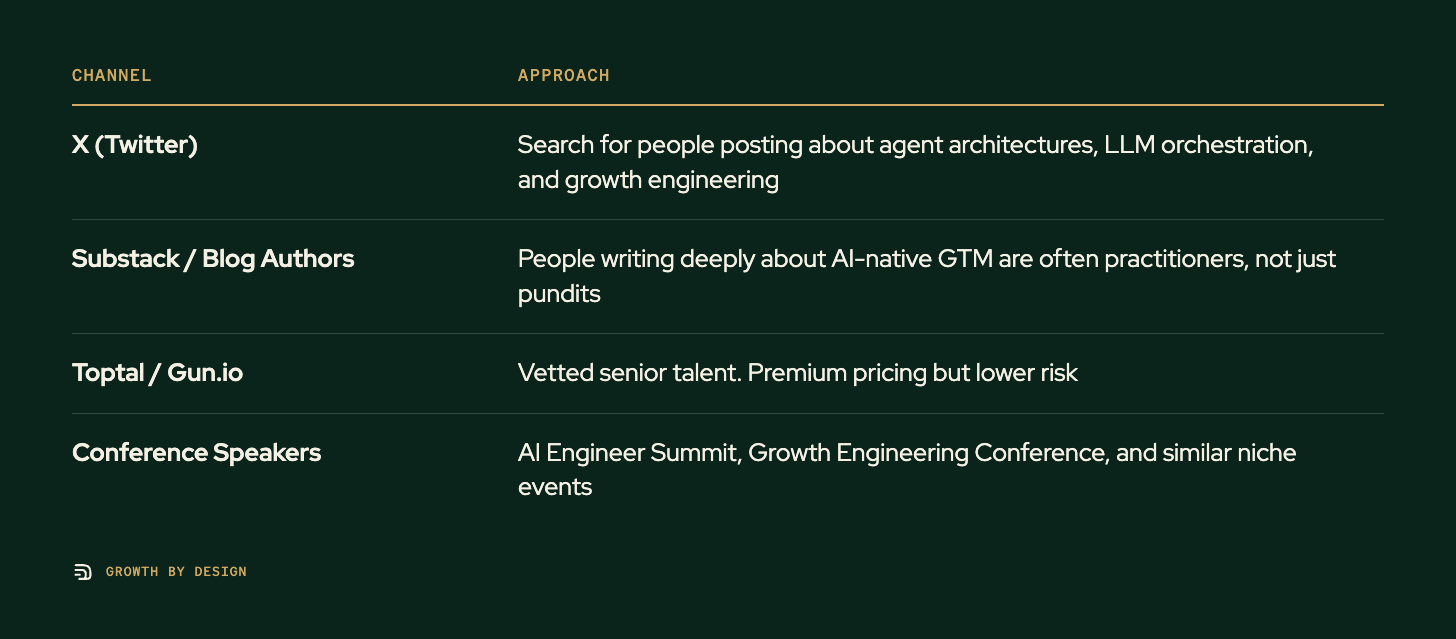
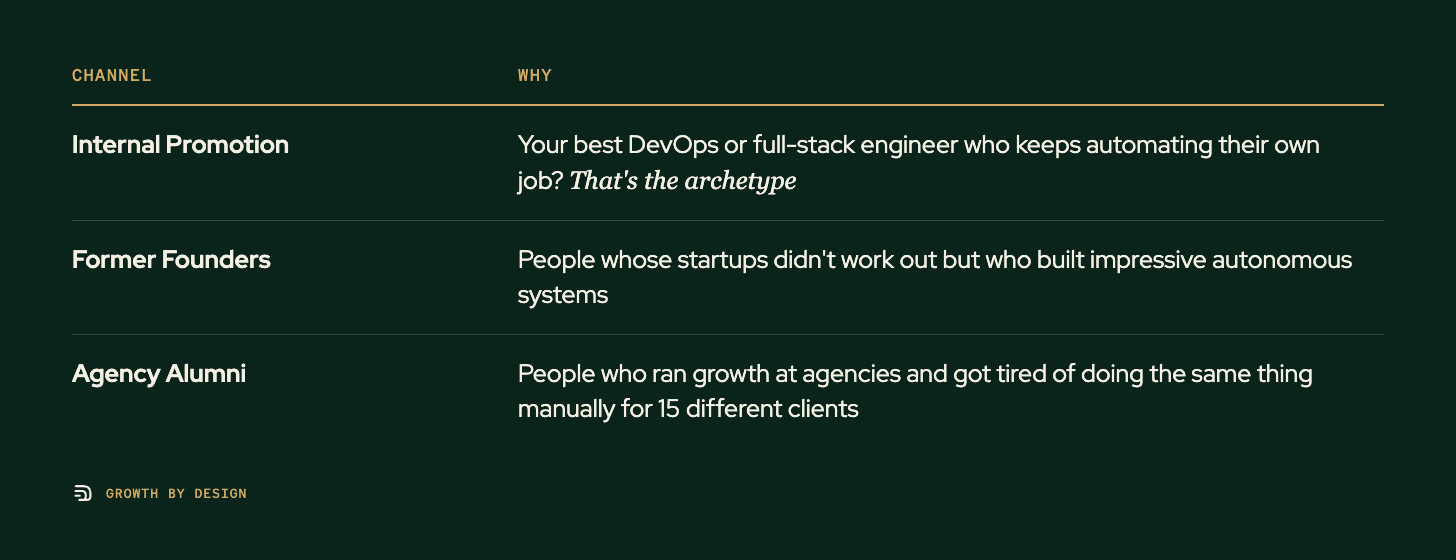
These people are not on LinkedIn with "Open to Work" banners. They're not applying to job postings on Indeed. Here's where they actually are:
Tier 1 — High-Signal Channels
Tier 2 — Targeted Sourcing
Tier 3 — Creative Sourcing
Interview Framework: How to Evaluate Them
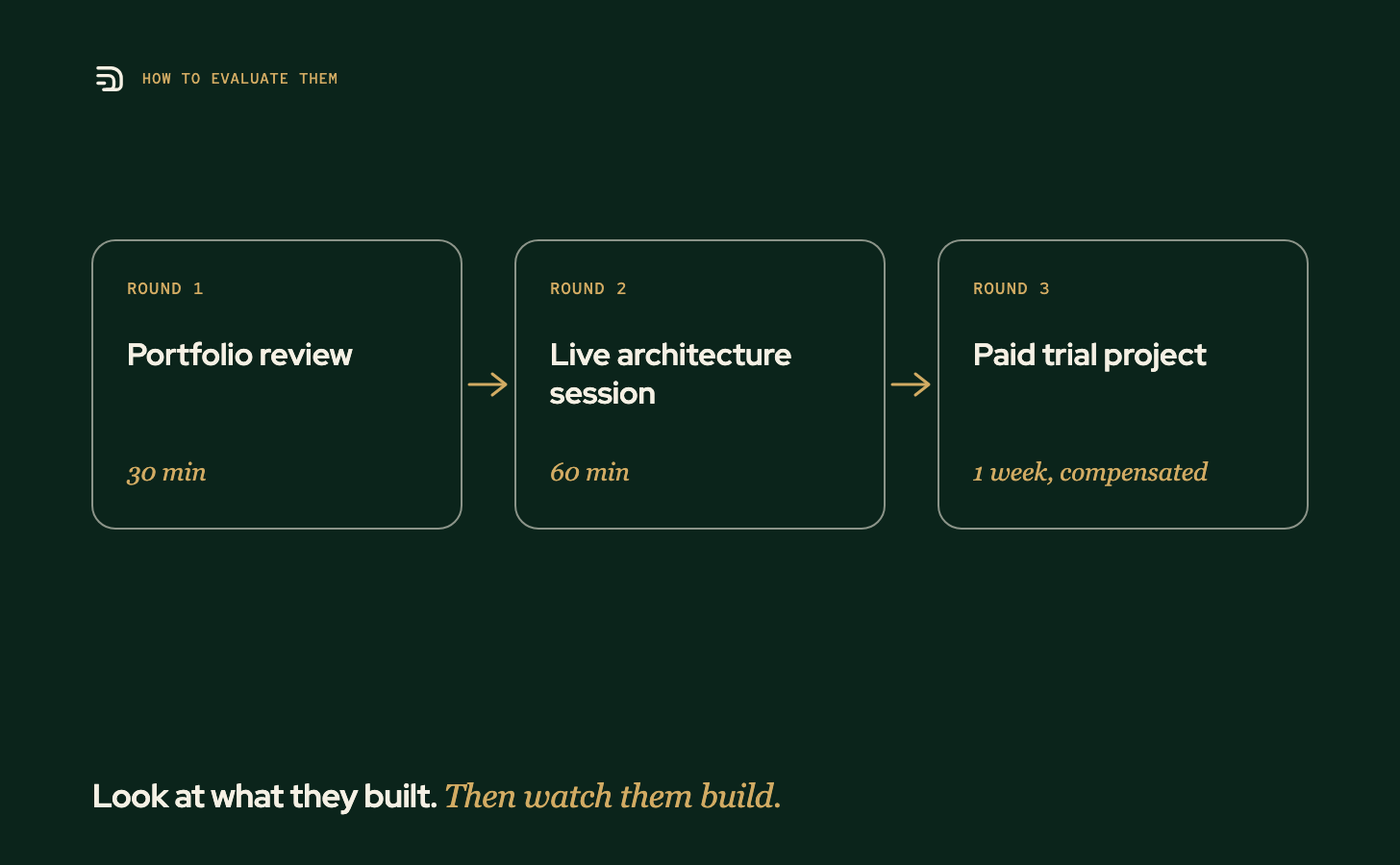
Round 1: Portfolio Review (30 min)
Ask: "Show me a system you built that runs without you."
What you're looking for:
Can they explain the architecture end-to-end?
Did they build it for a real business outcome (not a demo)?
Does it actually run in production?
Round 2: Live Architecture Session (60 min)
Scenario: "We have 500 inbound leads per month, a HubSpot CRM with 15,000 contacts, and 3 AEs. Design an agentic system that qualifies leads, routes them, and keeps the CRM clean — on a whiteboard."
What you're looking for:
Systems thinking (not just "I'd use ChatGPT to…")
Understanding of data flows and integration points
Cost awareness ("This would cost approximately $X/month in API calls")
Human-in-the-loop design (where should humans still be involved?)
Round 3: Paid Trial Project (1 week, compensated)
Assignment: "Here's access to our staging CRM and analytics. Build one agent that solves a real problem we have. You pick the problem."
What you're looking for:
Problem selection — did they pick a high-impact problem?
Shipping speed — did they actually deploy something?
Code quality — is it production-grade or a Jupyter notebook?
Documentation — can someone else maintain this?
Template Job Posting: Agentic Growth Architect
Copy this. Adapt it. Post it today.
Agentic Growth Architect
[Your Company Name] | [Location / Remote] | Full-Time
About the Role
We're hiring our first Agentic Growth Architect — the person who will design, build, and operate autonomous AI systems that power our entire go-to-market engine.
This is not a marketing role with a technical twist. This is not an engineering role with a growth mandate tacked on. This is a new function: you will architect the systems that replace manual revenue operations with intelligent, self-improving agent workflows.
You'll report directly to the CEO/CRO and own the technical infrastructure that connects our CRM, marketing automation, analytics, and customer communication into a single autonomous growth system.
What You'll Build
Autonomous Lead Qualification: AI agents that score, enrich, and route inbound leads in real-time — replacing manual SDR triage
Pipeline Intelligence: Systems that automatically update deal stages, flag at-risk opportunities, and generate forecast narratives
Revenue Attribution: End-to-end attribution infrastructure that connects first touch to closed revenue across every channel
Content & Outbound Engines: Agent swarms that generate, test, and optimize outbound sequences and content based on real-time intent signals
Self-Healing Operations: Monitoring and alerting systems that detect pipeline anomalies before they become revenue problems
Who You Are
4–8 years of professional experience in growth engineering, full-stack development, or revenue operations engineering
Production Python — you've shipped and maintained real systems, not just notebooks
LLM Fluency — you've built with OpenAI/Claude/Gemini APIs, understand function calling, structured outputs, and token economics
Agent Architecture — you've designed multi-agent systems (LangChain, CrewAI, or custom). You understand orchestration, state management, and failure recovery
CRM Native — deep HubSpot or Salesforce API experience. You think in objects, properties, and pipeline stages
Revenue-Literate — you understand CAC, LTV, pipeline velocity, and can explain how your systems impact each metric
Builder DNA — you'd rather ship a working prototype by Friday than present a slide deck about what you could build
Nice to Have
Experience at a high-growth startup ($5M–$50M ARR)
Contributions to open-source AI/ML projects
Background as a founder, co-founder, or early employee
Familiarity with ServiceTitan, QuickBooks, PandaDoc, or vertical SaaS platforms
Content creation experience (blog, newsletter, social)
Compensation
Base Salary: $170K–$280K (based on experience and location)
Equity: 0.25%–1.0% (4-year vest, 1-year cliff)
Signing Bonus: $15K–$50K
Benefits: Full health/dental/vision, unlimited PTO, $3K annual learning budget, home office stipend
How to Apply
Skip the cover letter. Send us:
1. A link to something you built that runs autonomously (GitHub repo, live system, or recorded demo)
2. A 2-paragraph explanation of the biggest revenue problem you've solved with technology
3. Your expected total compensation — we negotiate in good faith and don't lowball
Why This Role Changes Everything
The math is simple.
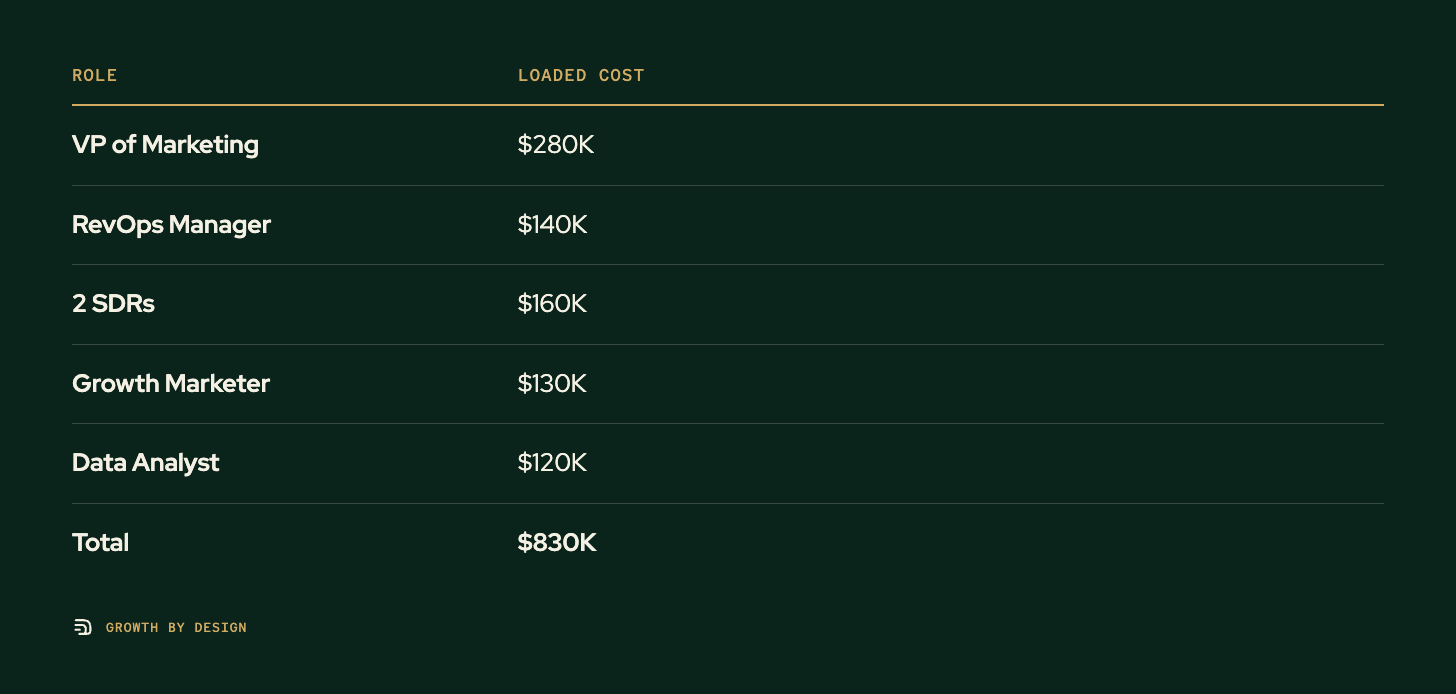
A traditional growth team at a $10M ARR company:
An Agentic Growth Architect + the right AI infrastructure:
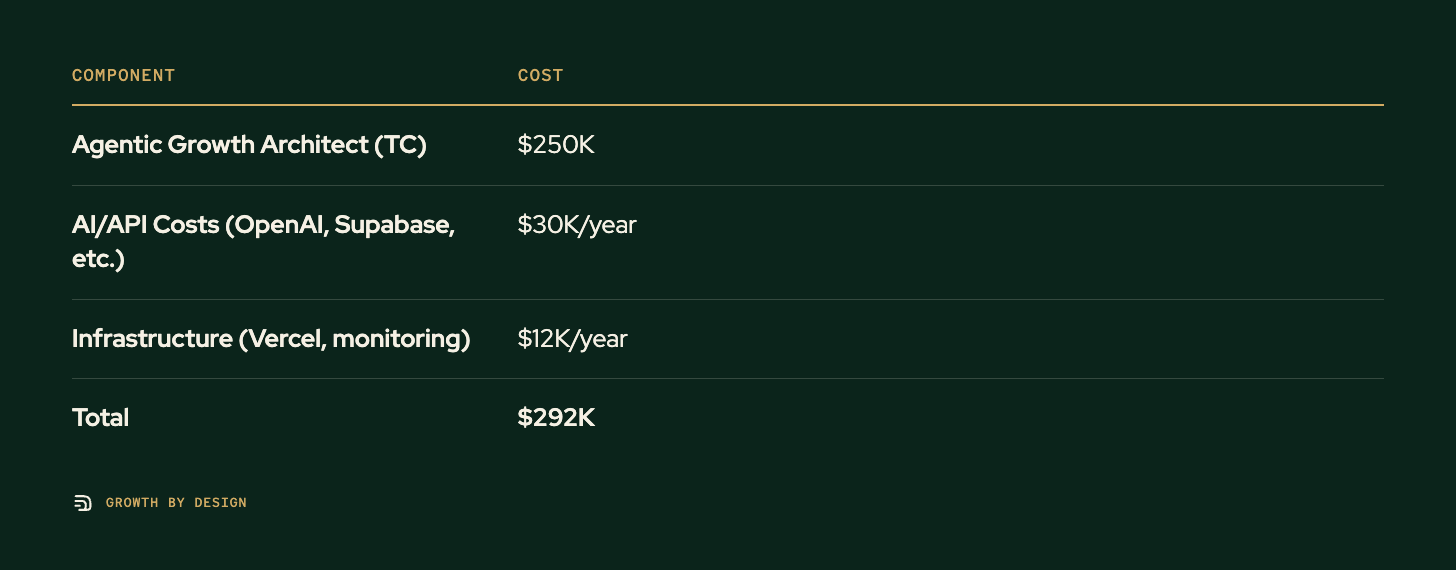
That's a $538K annual savings — with output that's faster, more consistent, and runs 24/7.
The companies that hire this person in 2026 will have a 2–3 year structural advantage over competitors still running manual GTM playbooks.
The companies that don't? They'll be the ones asking "Why can't we keep up?" in 2028.
Here's how we build that system with a team.
Need help hiring or deploying an Agentic Growth Architect? GetFresh Ventures provides fractional agentic growth engineering for companies at the $5M–$200M ARR stage. Book a discovery call →
Where would this pay off first in your company? The free AI Quick-Wins Report ranks your AI quick wins by payoff, with a first step for each.